
| Master of Primary English (2 years -Full Time) |
General Aims
The programme will provide a holistic learning experience in teaching and learning of primary English focused on the enhancement of domain knowledge, inquiry skills, contemporary primary education pedagogies and discourses, curriculum and assessment practices, and interdisciplinary connections to related fields. Students will be equipped with the theoretical foundations, content and pedagogical knowledge, and practical skills required for teaching early literacies/primary English effectively. The programme will enhance their research skills that will equip them with the ability to implement evidence-based approaches and strategies to address the needs of students. As a result of their advanced studies in the teaching of primary English, they will be able to offer critical perspectives on the primary English curriculum, initiate change in classroom practices, provide academic leadership in schools, and help build a professional community of teachers committed to enhancing the policy and practice of primary education. These aims are in line with the professional targets and expectations enshrined in the Bhutan Professional Standards of Teachers which seeks to achieve high levels of professional competencies. Accordingly, the programme supports the vision to create a teaching community of highly knowledgeable and reflective practitioners based on the unique Bhutanese values of tha dam-tshig ley gju-drey and philosophies of child centeredness, inclusivity and lifelong learning (Ministry of Education, p.7, 2019). The programme will produce the much-needed cadre of teachers teaching early literacies/primary English who have deep knowledge and high level of expertise in the theory and practice of primary education. The graduates will be specialists in the teaching of primary English and competent to assume professional leadership in the area of primary English.
Objectives
Upon completion of the programme, graduates will be able to:
- examine different theories of teaching and learning of primary English, and reflect critically on the relationship between theory and practice.
- design and implement strategies for effective learning and teaching of English in the primary classroom with innovative insights into primary curriculum.
- apply research and inquiry methods relevant to the learning and teaching of primary English and conduct empirical studies in this field.
- critique the primary English curriculum for Bhutanese schools in relation to major theories of curriculum development and implementation.
- lead professional development programmes for teachers teaching primary English and others in the professional community.
- apply advanced knowledge and skills in literacy, literature, and language development in primary English education.
- evaluate and apply the best practices of teaching and learning English in primary education.
- apply educational assessment methods and techniques in the teaching of primary English.
- design and use a range of teaching learning resources, including the use of ICT in teaching.
- initiate change in the language classrooms based on the principles of child centeredness.
- value English language skills as tools in academics and professional life.
Programme Structure
| Year | Semester | Modules | |||
| I | I | ENA505 Teaching Grammar in Context | ENA506 Second Language Acquisition Theories and Pedagogy | PSY505 Understanding Learners and Learning | RES506 Educational Research Methods |
| II | EDT504 Digital Pedagogy | ENA507 Applied Phonology in Primary English Education | ENA508 Approaches to Children’s Literature | RES507 Educational Research Project | |
| II | I | ENA609 Drama-Based Pedagogy | ENA610 Literacy Development in Primary Years | ASE604 Educational Assessment | |
| II | ENA611 Material Design for Language Learning | ENA612 Creating Positive Environment for Language Learning | CUR607 Curriculum Development and Implementation | ENA613 Songs and Rhymes in Language Classrooms | |
Admission Criteria
Prospective candidates should fulfill the following criteria.
- Holds a bachelor’s degree with teaching qualification from a university or an institution recognised by the RCSC, and nominated by the Ministry of Education.
- Has a minimum of 5 years of teaching experience and have taught or is currently teaching English at the primary level (PP – Class VI).
- Has scored a minimum of 50% in competency test administered by the College, which will consist of a written test and an oral interview. The written test will assess the candidate’s analytical ability and language proficiency and it will consist of 2 hours of written test. The oral interview will test the candidate’s aptitude and general proficiency in the subject and will consist of 25–30 minutes.
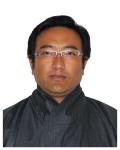
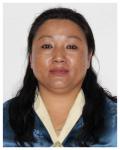
For Inquiries , you may contact:Dr. Dorji Wangchuk Mr. Karma Yeshey Programme Leader Dean of Academic Affairs M.Ed Primary English Email: karmayeshey.pce@rub.edu.bt Email: dorjiwangchuk.pce@rub.edu.bt Phone # +975-8-27620 Phone # +975-8-271487 Fee Structure Inquires about tuition fees may be directed to sangaychoden.pce@rub.edu.bt at phone number +975-8-271497 |

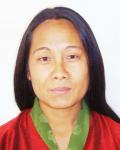
 Karma Lhamo, is a Lecturer.Under the leadership of the program leader, she participated to develop modules for Master program in Inclusive Education that Paro College of Education, Royal University of Bhutan (RUB) introduced the first ever full time postgraduate course of Master of Education in Inclusive Education in 2020. She joined the teaching profession in 2002 after graduating from Paro College of Education with English as her elective subject. She taught English literature and language to children from classes 6 till 8. In 2002, she started teaching children with special needs in one of the Special Educational Needs schools in Thimphu (capital of Bhutan) which was identified as the first model school for SEN. After teaching for eleven years, she was transferred to a teacher’s college, Paro College of Education, RUB as a lecturer in 2014. She offered courses such as academic skills modules, English and professional courses both to undergraduate and postgraduate students. She has facilitated several national trainings on inclusive and special education and also have participated in national survey on disability prevelance. Her area of expertise in special education.
 Hari Maya Gurung, M.Sc, is a teacher educator. She started to teach in October 1999. She taught in Lower Secondary School and Middle Secondary School for 6 years before joining the Paro College of Education (PCE) in 2007. Since then she has taught undergraduate (B.Ed Primary & B.Ed Secondary) and Diploma students, trained university provosts and other support staffs. She also taught Degree/ undergraduate students (B.Sc Agriculture) of College of Natural Resources for two semesters as an adjunct lecturer. She also has reviewed and written some of the modules for different courses and developed programmes. She has taken active role in the reviewing and writing of the school science curriculum for primary and secondary level. She along with other authors wrote Class X Chemistry text which is currently in use. She taught math and integrated science (sciences) in Samtengang Lower Secondary School in 1999 and Lungtenzampa Middle Secondary School from 1999 to 2005.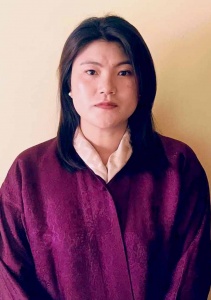
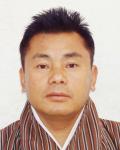 Kinzang Lhendup joined teaching in 1991 after completing his B.Ed from the erstwhile National Institute of Education, Samtse, Bhutan. He specialized in secondary English and Geography. He was posted in Ngangla Junior High School, and in less than six months he was recognized for his potential for leadership and was appointed as the officiating headmaster of the school. He served as the head of three different schools till June 1995 when he was summoned by the Education Ministry to take up the task of coordinating and leading English section of the Curriculum and Professional Support Service Division in the Ministry. It was during that time, in mid-nineties when he identified reading as a niche area for the Education Ministry to work on in order to enhance academic competence of students across the country. Consequently, Supplementary Reading Programme, his own brain-child was conceived and introduced, which is thriving to this day. His keen interest in helping students’ readings skills and literature encouraged him to pursue masters in Library and Information Studies from Dalhousie University in Canada. Kinzang’s strong belief in access to literature as the key to reading development encouraged him to pioneer in automating the libraries in the constituent colleges under the Royal University of Bhutan. He has provided his know-how in the automation of Sherubtse’ College’s library, and did a detailed planning of the existing PCE’s library automation. After serving in the college library for 10 plus years he decided to switch back to teaching, and so pursued his second masters’ degree in Contemplative Education from Naropa University in Boulder, Colorado, US. Today, Kinzang is experimenting with contemplation, mindful meditation, Buddhist inspired pedagogies in managing classrooms, motivating students.
 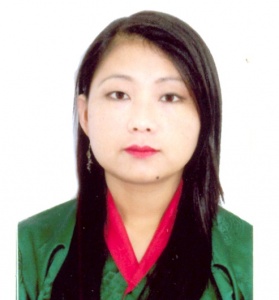 Ms. Dechen Tshomo, Assistant Lecturer of Paro College of Education has graduated from Lovely Professional University (India) with Bachelors of Degree in Performing Arts in the year 2015. She is one of the recipient of scholarship under Royal Government of Bhutan and an earmarked candidate of Royal University of Bhutan. She has joined Paro College on 21th August, 2017 after sitting for Interview and presently she works at Paro College of Education under B.Ed. primary program. Miss Dechen Tshomo had also attended short course training for Post Graduate Certificates for Higher Education (PgCHE) from Samtse College in 2018. So far, she have taught module such as Creative Arts for Upper Primary (EDN 312), Creative Arts for Lower Primary (EDN 104), Visual Information Communication (VIC 104), Academic skills (ACS 101) to regular students and she have also taught (DE) Distance Education candidates for a semester. She is also a club coordinator for Cultural Club and looks after the activity related to club besides classroom teaching.
 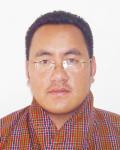 Mr. Tshewang Tobgay is an Associate Lecturer and intermediate researcher based in Paro College of Education, Royal University of Bhutan. His educational training and qualification include B. Sc. General, PGDE in Teaching of Mathematics and Physics, and M. Sc. in Mathematics. He was awarded the competitive Royal Government of Bhutan scholarship to pursue his undergraduate study upon completion of Class XII. He was selected by Royal Civil Service Commission, Bhutan in civil service examination as an Assistant Lecturer. Since 2010, he has been teaching in the college. He teaches Mathematics, Mathematics Education, Educational Assessment and other Educational and professional modules offered in the college.