ttt

Sharing Our Inner Weather: Check-ins and Check-outs at Paro

Kinley Bidha

Sharing Our Inner Weather: Check-ins and Check-outs at Paro College

The moment I stepped into Paro College of Education, I was prepared to learn pedagogy, curriculum and all the responsibilities that accompanied being a prospective teacher. What I could not have imagined was a practice so natural and so profound that it would transform the way I understand emotional well-being, not just in class rooms, but in life itself. This is called “Sharing of Inner Weather” a daily check-in and check-out which has been a cornerstone of our life here at the college.


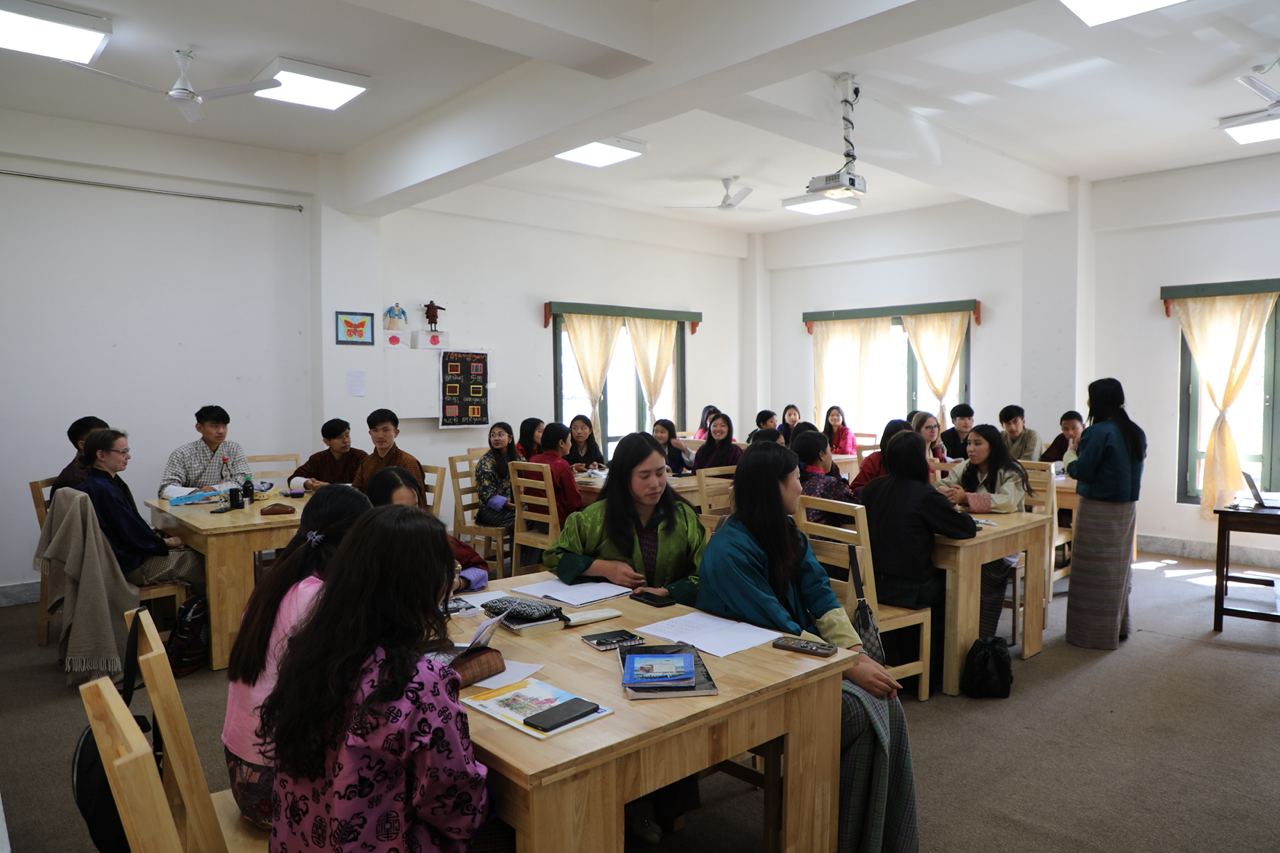
At the start of each module session, our tutors begin with a simple yet powerful question, “How are you feeling today?” As the class ends, they ask again, “How are you leaving the room?” These brief, open-ended check-ins carry significant weight. They create space for reflection, allowing us to pause amidst the rush of student life and acknowledge emotions we often overlook or push aside.


At first, I found this practice weird and not a preferred comfort. One must be courageous and bold enough to say what is going on inside him or her. Damn! 32 faces in a class, scared to be criticized and laughed at. Yet, a realization hit me – in high schools, we were barely questioned about how we felt. There, it was all about homework, studying for exams and staying in discipline. Emotional check-ins did not occur at all during the day. But at Paro College, the emphasis on emotional and mental well-being surprised me and was comforting to me.


As a college student, I have come to understand, just how much feelings we go through each day. One moment I am sure of myself and filled with energy, and then the next moment, I am stressed or unsure. It is normal that our moods change on the spot like weather depending on workload, homesickness, social pressures or even outdoor environment. Thus, when our tutors get time to allow us talking freely of what we feel, it allows space for us to breathe.


“I feel sunny today.” “There’s a storm in my head.” or “I’m in a fog.”  are some of the metaphors my friends use to describe their mood. Others share more directly: “I’m tired,” “I’m excited for the presentation,” or “I’m happy about the coming weekends.”  Even though not regularly, simply acknowledging these feelings out loud sometimes helps ease the burden. Other times, our instructors or peers give us good strategies or understanding support. It is most critical that we are heard and are visible. And we are not alone in this.


This practice has also strengthened our sense of community. When a classmate shares, “I’m feeling low today,” it invites empathy and understanding. It’s a reminder that behind every bright smile, there may be unseen struggles, that the person beside us might be hurting, just like we sometimes are. Over time, these honest moments of sharing have drawn us closer. We’ve become more compassionate, more supportive, and more deeply connected.


To me, “sharing of inner weather” has also changed my teaching style. It’s made me see that teaching is not just about information or classroom management. It’s about relationships. It’s about investing in students not as students only but as people. If I can tune in to my own emotions and learn about others’ emotional needs, I can become a better teacher, one who creates a safe, embracing and nurturing environment for every child.


This is also the kind of habit that has bred self-awareness and self-regulation. By noting how we are feeling at the start and end of each session, we begin to pick up on patterns. Knowing it meant that I could make better choices for my body and mind. These small acknowledgments have helped me build healthier habits and be in charge of my own emotions.


In the hurly burly, competitive world of today, emotional intelligence is the last thing on one’s mind. At Paro College, however, one is gently reminded that education is not only about the head but about the heart, too. “Sharing our inner weather” has gone from being a ritual to a witness to the fact that well-being matters, that feelings matter, and that learning can only happen when we are safe, loved, and heard.


To anyone who is entering into this noble profession, don’t underestimate the power of a simple check-in. Sometimes having the power to say “How are you today?” can turn one’s day or even life. There is something special in this habit that makes us feel at ease and begin the day with negative energy within us released.


In general, for me this simple habit of checking on students mental state has been inspiring. It’s something that I will carry with me into my own future classroom, not just as a technique, but as an attitude. After all, emotional well-being is not something that we should be holding within ourselves, it’s perfectly acceptable to inform the nice people in our lives how we feel and allow them to assist and direct us because we are all here grooming, learning and maturing to become a good person in the future.


Loading

The Education Philosophy Of Paro College Of Education

Pem Tshewang

The Education Philosophy of Paro College Of Education

Educational philosophy is a very ambiguous concept which remains in constant flux, differing from places to places, influenced by a number of social politics and individual characteristics. It is a philosophical analysis into understanding the nature of the education in an environment while analyzing the different sets of issues, challenges and opportunities of the philosophy. Bhutan, a nation situated between two global nations of India and China, has a strong emphasis and respect towards philosophy. Our philosophy is rooted in our belief which is heavily influenced by our religion: Buddhism. Buddhist philosophy remains as the pinnacle of every system in Bhutan, be it in religion, politics, education and even our very economic development. However, I would like to focus on the influence of Buddhist philosophy in the educational practices of Paro College of Education.


Paro College of Education, a premier teaching college in Bhutan, has a strong derivative towards Buddhist philosophy in teaching and learning. As a student, I have witnessed in a number of occasions how the Buddhist principles of compassion, empathy, sympathy, connection and respect has prevailed in not only the classroom setting but also in the general environment of the college. The college also advocates the prevalence of these characteristics by practicing a number of activities designed to allow the students to emit or exhibit these characters through activities such as mind fullness, emotion reflection, sharing of emotions in classroom and developing an environment where the students are free to express their sentiments and issues. More recently, under the initiative undertaken by our lecturers, a new program under the study of cultivating the four immeasurable in the student teachers, many lecturers have initiated the practice of inculcating the four immeasurable (tshey mey zhi)  within the student teachers through the practice of emotional reflection, guided meditations, emotional empathy and self-affirmations. The practice and the study which is heavily inspired by the traditional Buddhist philosophy and undertaken with an aim to develop and build competent teachers who are not only competent in terms of content and pedagogical approaches but also emotionally sound and intelligent. These varied practices clearly illustrates how Buddhist philosophy plays a crucial role in the affirming the teaching and learning process within the college.


Apart from Buddhist philosophy, the educational philosophy of Paro College of Education provides a strong emphasis on the preparation of competent, passionate and committed teachers whose values are rooted in Bhutanese values and the principles of Gross National Happiness. The college provides a strong emphasis on building competent teachers through the module, the content knowledge and the pedagogical input that they provide the students with. The college also regularly reviews and revises the curriculum by the end of every semester where the key concepts and pedagogical approaches are analyzed and updated with every review and then aligned in the curriculum in order to ensure that the student teachers are well equipped with competent knowledge and practices of the 21st century curriculum. ICT modules with introduction to AI tools, the use and ethics, understanding digital citizenship, new pedagogical approaches in the 21st century, researching and designing teaching strategies are some of the examples of how competencies are instituted in the Paro College of Education.


Paro College of Education has a huge duty to undertake in the development of our nation. As our majesty has emphasized, the future of the nation, whether it soars in the sky or sinks in the depths, depends upon the youth of our country and it is the central role of the teachers to ensure that the youths are educated and well equipped in terms of knowledge and values. As an institute and a college, Paro College of Education has indeed taken the necessary steps in envisioning our majesty’s dream and hopes.  The blend of Buddhist philosophy and international competency will without a doubt develop a number of competent teachers for the future of our country and with these practices, Paro College stands as a model for holistic and values-based education in Bhutan.


Loading

On My Graduation

Sonam Yangki

On My Graduation

Well! We did it. We’ve officially graduated from Paro college of Education. Initially, I thought putting down four years of my life in few short paragraphs would be impossible but I went ahead and did it anyway.


Looking back, first year was my “lost cow era”, most of the time I had no clue what was going on. After every second session- which ends at 1pm, I had an uphill battle with the stairs leading to the mess.


Second year was the chronicles of “did new have an assignment due today?” we turned procrastination into an Olympic sport. Remember! Pulling an all-nighter to complete the scrap book and the picture books?  The ECCD field trip to Shari & Dotey, the forced mass cleanings that we attended out of fear of detentions and the circle of friends we had?


Third year was the practicum panic, not even two years’ worth of micro teaching and child theories prepare you for 34 tiny heads dissecting your life choices. “Miss, why can’t I do this?”, “Miss, why can’t I do that?”, “miss, are you married?” “Miss! Miss! MISSSS!”


There were days when I had glue on my hair or chalk dust everywhere but there was also a new found respect, for every teacher that ever lived. It was also the first time I realized, “I’m becoming who I dreamt to be.”


Then, came the final year. The first semester, everyone was busy sharing their TP anecdotes. This was also the semester where this place -Paro College of Education, stopped feeling like a campus and more like a home to me. The Island was our inside joke, our emotional pokto was a therapy zone, KD auntie’s fried rice and a daily visit to the college stationary during the breaks.


The very last semester, for me…it was a quite counting of the last. The last walk through the Library, the last meal in the college canteen – loud, chaotic place and how I loved complaining about the food there. The last time walking through the college gate and ashim Mon Maya greeting me with her lovely smile. The last class in that room, sitting face to face with my classmates knowing it was ending and trying to freeze time.


Graduation is beautiful, yes…but it is also a kind of grief, leaving this scared ground, these walls that held our growing pain, our joy and our becoming. It’s ok to be afraid; it’s ok if your heart aches a little today…mine does too but here’s what PCE taught me; endings are just love in disguise. The love we carry from friends who felt like family, Teachers who believed in us louder than our doubts and this wild, wonderful place that shaped us.


So, thank you to every friend who laughed with me, to the amazing faculty for giving us room to stand tall and PCE for this mess, magnificent, heart stretching gift of four years.


We leave today but we take with us; the sound of shared laughter, warmth of familiar faces and the courage we found in those tiny classrooms full of big dreams.


This isn’t goodbye, it’s a thank you. For every “first” that brought us here and the every “last” that taught us how deeply we mattered. Thank you PCE, you will forever be our home.


For the very last time, this is Sonam Yangki from 4PCA signing out.


Loading

Me and My Flute

Tshering Denkar

Me and My Flute

“Eww, this class and this thing!” I clearly remember saying that as I placed the colourful stringed Dramgyoen (traditional Bhutanese lute) down in frustration, completely drained after yet another struggle to get the notes right. I must have repeated that phrase a dozen times or maybe more. At the time, nothing about learning music felt exciting. If anything, it felt like a burden I didn’t sign up for.

This all unfolded in one corner of our college campus – the Nyencha Room (music room), part of the Heritage Education and Professional Development Centre (HEPDC). The center plays a key role in preparing future teachers like us to value and carry forward our culture through four main focus areas: traditional music, arts and crafts, theatre, and Driglam Namzha (Bhutanese etiquettes). But for today, let’s talk just about the music room.

Located near the entrance of the college, the Nyencha Room offers a calm and pleasant space for learning traditional music. It has a traditional Bhutanese architecture on the outside with a soft, modern touch inside. It’s cozy, with cushions, sofas, and some books neatly placed for students to relax and practice music in comfort. While I wouldn’t call it my favourite place on campus, it’s certainly a space that holds many strong memories for me.

Right outside the room, there are well-paved cemented areas with flowers in bloom and a stone carving of Jetsuen Dolma that fills the place with her blessings and presence. A little to the side, there’s a grassy patch where students often sit under the open sky, letting their fingers move with the rhythm of the wind and the gentle sound of the river flowing nearby. Just around the corner stands another stone carving, this one of Zhabdrung Rinpoche along with a mani dungkhur that spins in silence, and sometimes with students and other visitors constantly spinning it. The entire space feels peaceful, grounding, and quietly sacred.

Our music classes were led by Mr. Yohan, a passionate and humble educator from Sweden who isn’t just well-versed in modern instruments like the guitar and piano but is also deeply knowledgeable about Bhutanese traditional music. Alongside him, Mr. Tshering Penjor also guide us with great patience. His skill with traditional musical instruments is so impressive that I often found myself watching in quiet awe. Their dedication iss undeniable, but for someone like me, with zero music background, it was tough.

We were introduced to four traditional instruments – Dramgyoen, Pchiwang (similar to the violin), Yangchen (similar to a xylophone), and the flute. We had to pass a demonstration test every two weeks before moving to the next instrument. The Dramgyoen, in particular, tested my patience. I practiced until my hands ached and my breath ran out. I didn’t visit the music room much in my free time, but when I did, it was mostly to catch up or get through the next test.

So yes, I struggled. I hesitated. There were moments I doubted myself and questioned why I had to go through it all. But looking back, this very music room reminded me that I am capable, that with effort and an open mind, I can go beyond what I thought were my limits. It wasn’t just about learning music. It was about discovering a part of myself I hadn’t explored. The only thing we truly need is the willingness to try, to embrace even what feels unfamiliar. So yes… I’m a survivor, not of the music room, not of the weekly tests, but of my own false belief that I couldn’t do this or that. Because at the end of the day, what stays with me is not the struggle, but the soft, funny and meaningful memories from that room and instruments. And yes, not to forget- The beautiful scenery which was filled with our frustration turned into laughter.


Loading

SDG 5 in Action: How Paro College of Education Champions Gender Equality

Euthra Tashi Lhazin

SDG 5 in Action: How Paro College of Education Champions Gender Equality

At Paro College of Education, promoting gender equality goes beyond classroom discussions—it is woven into the heart of student life and learning. As a campus that actively supports the United Nations Sustainable Development Goals, especially SDG 5, the college has become a platform for driving real change in attitudes, beliefs, and practices around gender.


With the guidance of dedicated faculty and support from inclusive student clubs, Paro College regularly organizes awareness campaigns, workshops, and open forums where students explore topics such as gender stereotypes, leadership opportunities for all genders, and the importance of consent and equity in education. These activities are not just educational—they inspire action and foster a safe, respectful environment for everyone.


One of the most impactful initiatives has been the creation of student ambassador roles, including the SDG 5 College Ambassador program. As one of the ambassadors, I had the opportunity to be part of a dynamic movement led by students and supported by the college administration. From International Women’s Day booths to storytelling campaigns on social media, these efforts have brought gender conversations to the forefront of campus life.


What sets Paro College apart is its belief that every student is both a learner and a leader. By encouraging young people to take initiative and speak out, the college is nurturing a generation of educators who will champion equality in their future classrooms and communities. It’s a place where change begins in small yet powerful ways—through shared dialogue, community support, and collective action.


At Paro College of Education, SDG 5 is more than a target—it’s a lived experience. And through its strong commitment, the college continues to shape a more equal and inclusive future for all.


Loading

Answering the call to teach

Dorji Lhazom


Answering the Call to Teach


During my interview, I was asked a simple question: “Why do you want to be a teacher?” Without hesitation, I talked about the ‘loop of learning’ on how being a teacher means you’re always learning, not just teaching. For me, it was the most beautiful profession because it never put a limit on my growth and development. Every student you meet brings a new perspective to life, and with each one, you learn something new. I also stated that I want to walk a lifelong learning journey one where I can inspire young minds and be someone they can truly rely on, a  strong pillar they can hold on to when they need support. After the interview, I waited anxiously, praying every single day for that one call. And when it finally came, my heart skipped a beat I had been accepted into Paro College of Education. I remember smiling to myself and saying, “Yes! I’m ready to face any challenge to be part of this noble profession.” What made it even more special was knowing that today, Paro College welcomes some of the brightest students in the country.


This journey marked my first solo travel from my hometown to Paro. I left behind the place where I had grown up and spent my high school years, carrying hopes that Paro might offer me a better future. On the way, I couldn’t help but laugh at myself remembering how I used to imitate my teachers after school. I would dress up like them, gather my toys as students, and write on the glass of our shelf, pretending it was a blackboard and repeating what my teacher had taught that day. Looking back, I realized that little act might have been a glimpse of the path I was truly meant to follow. As I arrived, I was mesmerized by the sight of the beautiful Pa Chhu River winding through the mountains, and the majestic view of Rinpung Dzong.  The college stood there like a grand fortress, as if it was silently calling out to me, welcoming me into this new chapter of life.


At the college, some student representatives warmly welcomed the new batch of students. I registered my name, and a student councillor kindly guided me to my assigned room. My hostel was on the second floor, and to my surprise, it had bunk beds I had never stayed in a hostel before. My roommates had already settled in, and the only bed left was the top bunk, which made me a little nervous. Everything else felt new the place, the people, even the silence. I tried to talk to my roommates, but they were shy and spoke very little. Still, I managed to learn their names and where they had come from. That night, I lay on my top bunk with teary eyes and a heavy heart. It was the beginning of a new journey but like all first steps, it felt uncertain and overwhelming.


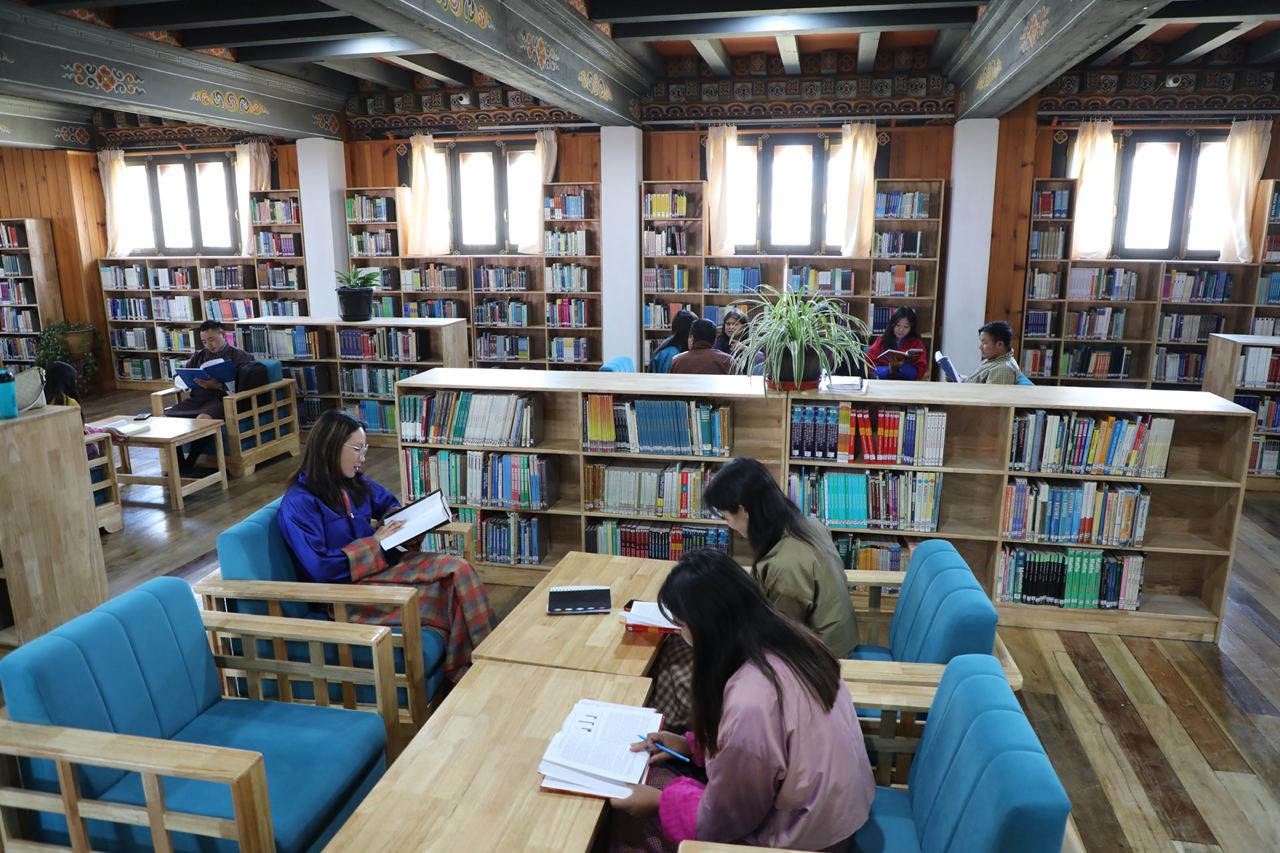
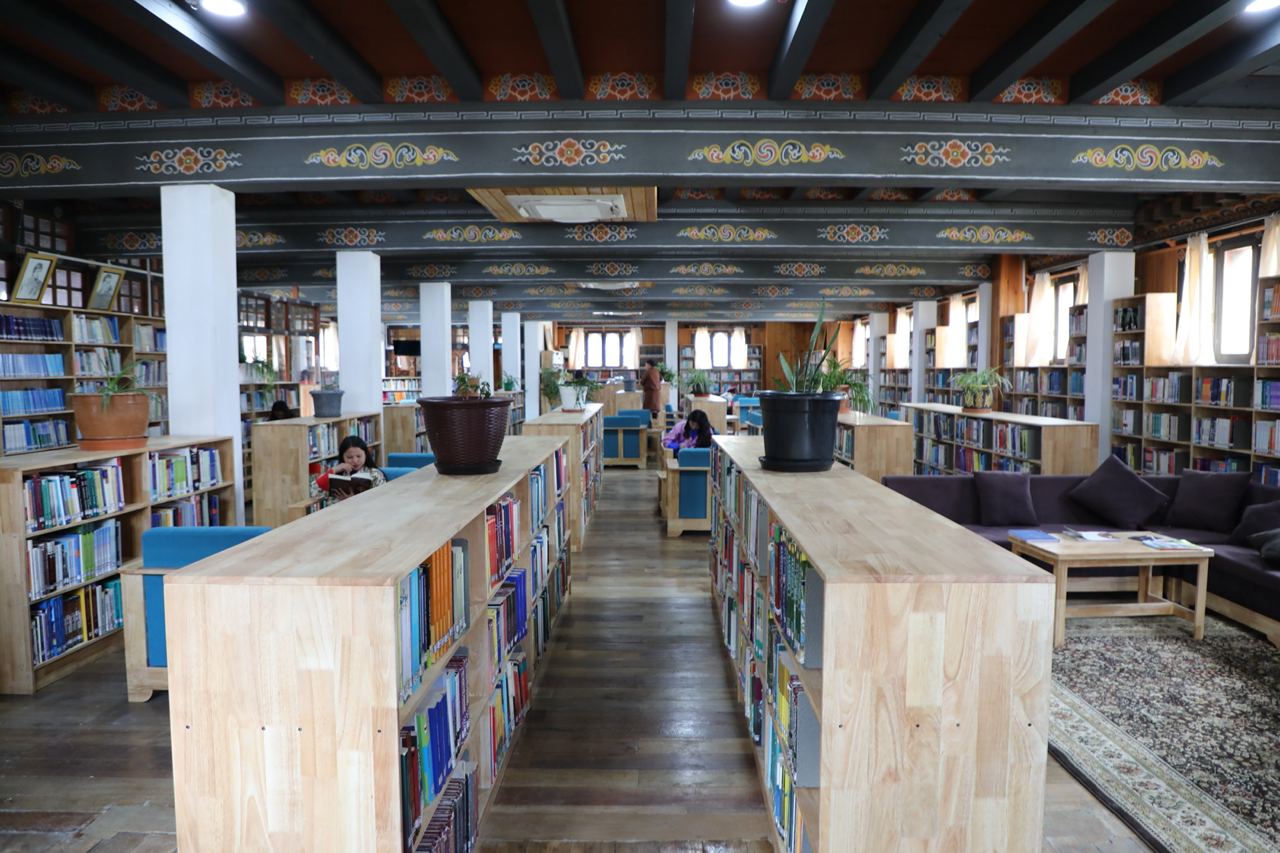
The next morning, I woke up early, dressed in my new kira, and wore the hand-woven tego my mother had lovingly woven for me. I wanted to mark my first day with something meaningful something that reminded me of home. After breakfast, all of the fresher’s gathered in the Manjushri Hall. It reminded me of a high school multipurpose hall, but it felt more advanced like a real auditorium. Several lecturers gave us a warm orientation. They shared facts and stories about college life, and I found myself deeply engaged, listening with wide eyes. By noon, the interim councillor took us on a campus tour. I was genuinely impressed by everything I saw: a stationery shop, a cozy canteen, a spacious library filled with books, a music center, a laboratory pool, and even a gym with modern equipment. The gymnasium especially caught my eye it looked just like the ones I had only ever seen in movies. As I walked through the campus, I couldn’t help but think, how did I get so lucky? It felt like I had stepped into a beautiful, advanced little world a place full of opportunities, waiting for me to grow.


Paro College has exceeded my expectations. If the outside is this beautiful and well-equipped, I believe the inside will help shape capable, knowledgeable teachers. This institution is truly a blessed place where thousands have come to learn. Being part of this journey makes me feel proud. Paro College has become my second home. It is here that I’ve begun to turn into a new version of myself always hungry to learn, eager to grow, and determined to become someone who inspires others. I now realize that I want to be a teacher not just because it was my only option, but because this journey has shown me the value of education, the strength of resilience, and the power of guidance.


This place has given me more than I expected. For that, I will always remain grateful and one day, I hope to give back by becoming a teacher who can guide, uplift, and inspire future generations.


Loading

ttt

Sorry, no posts were found.

Loading

Loading