ttt

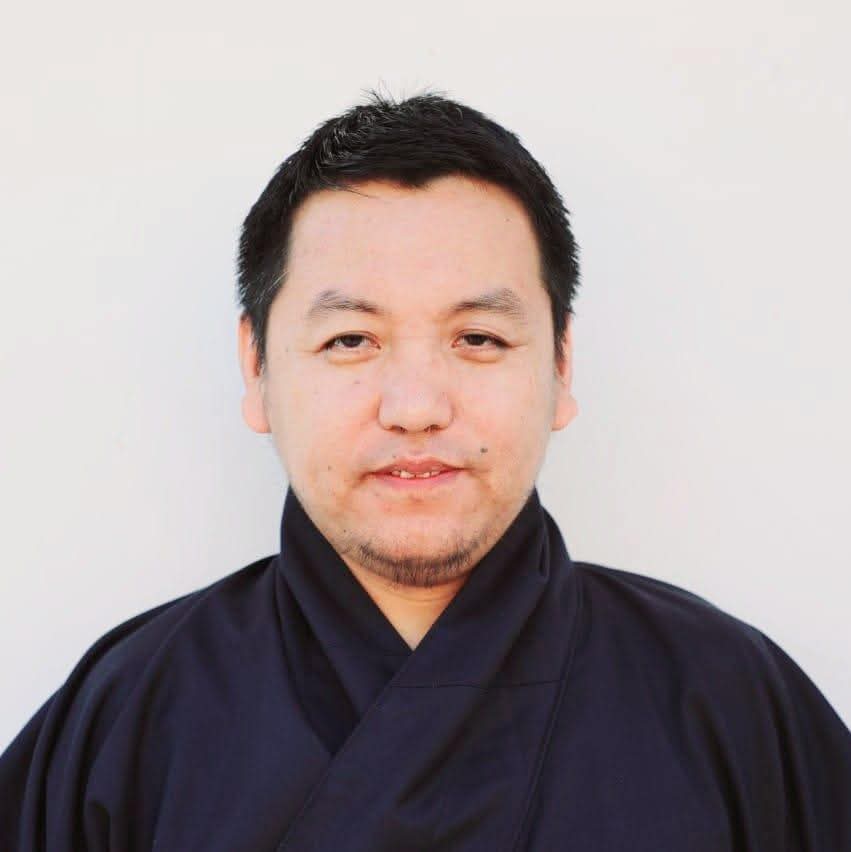
Sangay Tshering

Professional biography

Sangay Tshering is currently a lecturer at Paro College of Education With an extensive tenure of over 15 years as a lecturer at a reputed teacher training college in Bhutan, he has cultivated a profound expertise in both pedagogy and scholarly investigation across a diverse array of subjects within teacher education.     Email: stshering.pce@rub.edu.bt

Loading

The Manjushree Grove of Harmony: A New Sandstone Mural in Paro College of Education.

Bishnu Sharma

The Manjushree Grove of Harmony: A New Sandstone Mural in Paro College of Education.

A new and sacred sandstone mural of the Manjushree has recently been built in Paro College of Education, coinciding with the college foundation day on 4th of November, adding a beautiful spiritual touch to the college environment. The mural, which was imported from India, stands as a powerful symbol of wisdom, knowledge, and enlightenment. Its presence brings a sense of peace and inspiration to all who visit or study at the college. In Buddhism, Manjushree is known as the Bodhisattva of wisdom. It represents the sharp and clear intelligence that cuts through ignorance and confusion. The image of Manjushree holding a sword and a lotus with a scripture symbolizes the light of wisdom that guides human beings toward understanding and truth. Having such a sacred mural within the college reminds everyone, lecturers, students, and visitors about the importance of learning with both the mind and heart.

The arrival of the Manjushree mural has brought excitement and joy to the college community. Many students and lecturers expressed that the mural makes the atmosphere of the campus more peaceful and meaningful. It serves as a gentle reminder that education is not only about gaining knowledge from books but also about developing inner wisdom, compassion, and mindfulness. Visiting the mural feels like entering a quiet space for reflection. Many people, especially the students expressed that they find comfort and calmness while standing before it. The detailed artwork and the design captures attention and helps one feel connected to the deeper values of Buddhist teachings. The mural also serves as a source of guidance, encouraging everyone to approach learning and life with understanding and good intention.For Paro College of Education, the Manjushree sand mural is more than just decoration; it is a blessing and a guide. It reminds the entire college family to walk the path of knowledge with humility, kindness, and clarity. The mural will continue to inspire wisdom among future teachers, helping them become educators who teach not only with intellect but also with compassion and insight. Therefore, when you visit the college next time, make sure to visit the scared site and let your inner peace bloom before the god.


My Journey Through Action Research Module

Purni Maya Ghalley

My Journey Through  Action Research Module

One of the most meaningful modules I studied in Paro College of Education College is  a module on Action Research, which is introduced in the second semester of the third year. This module was first introduced to us by Dr Gyembo Tshering, and at first I wondered what it is. What are we going to learn in this module, but as we delved further, I understood the importance of this module.

This module focuses on helping future teachers become reflective practitioners who can improve their teaching through systematic inquiry. The module challenged me to explore deeper, think critically, investigate issues, develop interventions and also give credit to the authors. It also introduced me to the process of identifying classroom problems, collecting data, and finding practical solutions that can enhance student’s learning.

Throughout the module, I learned about the different stages of action research, such as identifying area of focus, collecting data, analyzing the data and developing interventions. I also developed skills in writing research proposals, using data collection tools such as questionnaires and interviews, looking for various articles related to the topic and developing interventions or solutions for the related issues. The module provided me with an opportunity to think critically about how would I do my teaching practice and find ways to make learning more effective and engaging in the classroom. By conducting a small research project, I discovered how teachers can use evidence to guide improvement rather than relying only on assumptions. It made me more confident in addressing challenges and finding creative solutions for the targeted problems or issues in the classroom.

Though the module was very challenging yet, I found it very exciting and appealing  as it deepened my understanding of how teachers can be researchers in their own classrooms. It strengthened my ability to reflect, investigate, and act on issues that affect teaching and learning. I think that this is one of the most important module and it helps each and every individual in a very great way, indeed this module aspires every single student’s to become an effective teacher. Moreover, it is like a guideline for every student of Paro College of Education to excel and become a productive teacher.

Being a PCEan under Blue Sky and Becoming a Teacher

Sangay Choden

Being a PCEan under Blue Sky and Becoming a Teacher


On 8th August 2022 I took my first ever step into that serene campus of Paro College of Education.  I still remember how the vast sky, painted  in endless hues of blue, mirrored my excitement and uncertainty that day. Though PCE welcomed me warmly, being a very dense and clueless self then, I wasn’t ready for its warmth.

SB212 was the first classroom I entered where I felt as stoic as a statue  while being overwhelmed by the sight of unfamiliar faces of my mates. The class was indeed bursting with enthusiasm and energy, leaving me both inspired as well as intimidated.

Yet, PCE nurtured me through shedding my shyness and in building my confidence . Every activity, discussions , and assignments  became a stepping stone for my self discovery. Meanwhile, the days soon turned into years. Upgrading to 3rd year marked the end of my hostel life experiences such as the days filled with laughter, late night talks, and our midnight group karaoke sessions. Though it was  a short lived experience , it taught me the sense responsibility, joy in shared living, interdependence and more.

Very soon, our long awaited phase of becoming a student teacher came into reality. Just like any other PCEan, I was also filled with both eagerness and fear as I should park my jovial college days aside and be a walking role model for my students. There, at Ramchetsekha primary school, I found myself standing infront of real students, feigning confidence to shield against my lingering shadows of social anxiety.

Yet, my students were my greatest teachers who actually pulled me out from my own comfort bubble. Their curious tapioca pearl eyes and innocent smiles reminded me that I have indeed chosen the right path. They helped me in seeing the potential that I had buried deep within me.

Through  trust and laughter, they unclipped my wings and allowed me to soar beyond any self doubt. Being with them, I learn patience, empathy, and the true meaning of being an educator which even the college modules can’t describe.

However , as July 2025  drew closer, I had to end my teaching practicum which felt like closing a beautiful chapter of my life . It was hard to say goodbye after all the shared memories I had with my students , yet I had to and I still believe that they were really sent by my god to act as a lighthouse  to illuminate my journey in becoming better person from what I was.

Soon, on the 28th of July 2025, I once again walked through that gates of PCE, but this time  I was calm, grateful, and felt whole. I was no longer that uncertain girl who entered through that same gate under the blue hue sky in 2022.

Overall, I must say that’s the charm of being PCEan, as you got to grow not only in knowledge but in wisdom, confidence and compassion as you prepare for the real world ahead after the college. Hence, thank you PCE for shaping me to become a better version of myself , for strengthening my voice and filling my heart with a sense of belonging and purpose.

When Flute Makes You Hungry and Music Makes Memories

Ambeka Nepal

When Flute Makes You Hungry and Music Makes Memories

Music at Paro College is obviously not just a module; it is an experience. Honestly, the moment you step into the music room, you will feel like, ‘My god, how will I be able to score marks using these instruments when I don’t even know how to hold them?’ Of course, in the beginning, none of us really knew how to hold a flute (Lim) properly, or how to find the chords on the yangchen, chewang, Dramnyen. But slowly, painfully, and yes, hilariously, we began to shape sounds into something that could be called music. And blowing the flute? Indeed, it often made us so hungry that we kept glancing at the clock, wishing lunch would come faster.


Practices were never perfect. One person went too fast, another went too slow, and the whole thing sounded like a big noise. Yet, those mistakes gave us the best memories. Sometimes, during group assignments, when we lost track of notes, we pretended that we meant to stop there, as if it were part of the performance because we were worried about losing marks Of course, no one was fooled, but we carried on, laughing afterward and teasing each other “Yes, you are the best Yangchen player in the world!” Those mismatched moments, far from ruining the experience, became the funniest and most unforgettable parts of it.


And honestly, if someone were to ask me today to write down the notes for a song or perfectly grade the chords, I would have to say: sorry , I can’t. Obviously, most of my friends can’t either. But that was never the point. What we did gain was the confidence to integrate music into our future classrooms, to know how to guide children through rhythm, melody, and joy, even if we can’t compose like professionals. That, indeed, is the beauty of these modules: they don’t demand perfection, but they give us something much deeper.


We owe it to our tutors. Of course,  learning from people like Johan, our foreign music teacher, who was so passionate and patient, was itself an inspiration. And then there was Sir Tshering Dorji , who reminded us, in his own way, that teaching requires patience as much as knowledge. Honestly, if I were in their shoes, I might have been frustrated watching us struggle so long to get a single chord right. But they never gave up on us. They showed us what it means to be a teacher: to keep encouraging and guiding, even when progress feels slow. After all, choosing this college is a reminder to be a good educator  in every deed.


And perhaps one day, when we walk the paths of this campus again, we will carry these music-filled memories like treasures. Indeed, even after decades, I can already imagine myself pausing near the music room and thinking: yes, that’s where I sat, that’s how I practiced, that’s how we laughed. Of course, these are the stories we will share with others, the stories that turn ordinary practice sessions into extraordinary memories.

Paro College: The Notebook

Chandra

Paro College: The Notebook

The first day staring at the surrounding made me feel like “ this seems how the Paro looks, alright!” The next day I came, and another day I came, I started finding the change. People may just think, a college is a study place, an enjoyable survive but I felt more than that. It’s the whole package actually.


This college taught me the maturity, resistance, perseverance and above all taught me ignorance. It’s the college that doesn’t just give you the training for becoming a teacher, but it tooks us through the disciplines. It’s not a taught discipline but we acquire it naturally. People say, maturity develops as we age, but my experience says it’s through the kind of phases we face in our journey. Paro college has impact which makes us feel adult, matured and a responsible me.


As students learning to handle young minds, we learn respect, politeness, mutual understanding and valuing each being. That’s how we become the whole package. The whole package, with content knowledge, the culture and the ability to handle all and learn it as a whole to exist as a real one, the real teacher. Paro didn’t just shaped my academic teaching methods but how to groom myself more, how to care myself more in order to care others. Paro College is helping me grow into a teacher, and a good human being.

Sports at Paro College of Education: Football, Volleyball, and Basketball

Euthra Tashi Lhazin

Sports at Paro College of Education: Football, Volleyball, and Basketball

At Paro College of Education, life is not only about books and lectures. Sports are a big part of our campus culture, and they bring students together in the spirit of fun, competition, and friendship. Among the many activities, football, volleyball, and basketball are the favorites that keep our college lively.

Football is hands down the most loved game here. The moment a match is announced, the entire ground comes alive with cheers and excitement. Matches between different classes are the highlight of the year, where players show their passion, skill, and teamwork. It’s more than just a game—it’s about unity and the friendships built along the way.

Volleyball also has a special place in our hearts. The official matches are played in the indoor gymnasium, creating an atmosphere full of energy and thrill. But when it comes to just enjoying the sport, our two outdoor courts are always buzzing with students having fun matches. Whether serious or casual, volleyball is all about cooperation, quick moves, and bonding with teammates.

Basketball is the sport for those who love speed and action. The court never stays quiet—students are always dribbling, shooting, and defending with energy. Matches between classes spark healthy rivalry, but they also bring out confidence, stamina, and the joy of working together as a team.

At the end of the day, sports at Paro College of Education are more than just games. They add color to college life, help us stay fit, and teach us teamwork and leadership. Most importantly, they give us memories to cherish long after we leave the college.

If The Walls Of Paro College Of Education Could Speak

Ambeka Nepal

If the Walls of Paro College of Education Could Speak


If the walls of this college could speak, they would share stories of growth, discovery, and joy—stories that you are about to become a part of. I came from a remote village, where life was simple and familiar. I had never seen much beyond the world I was born into. However, the moment I stepped into Paro College of Education, my horizons expanded. I met people from diverse backgrounds, heard languages I had only known by name, and realized that life is far broader and richer than I had imagined.


Friendships here are genuine and warm. Unlike high schools, we rarely quarrel or create unnecessary conflicts. As future teachers, we learn responsibility, kindness, and respect—not just from books, but from every interaction. We learn how to respect differences, nurture trust, and grow together, making every friendship meaningful and inspiring. The campus itself is a haven. Gardens bloom beautifully, the environment is clean and peaceful, and life moves without the constant ringing of bells. Freedom here is not a gift—it is earned through discipline, balance, and careful choices. Being a day scholar in the later years teaches independence. We learn to manage houses, handle daily chores, and balance studies with life—preparing us for the responsibilities we will face as teachers and beyond.


Learning at PCE goes far beyond textbooks. Before coming to Paro College of Education, I never truly understood how to handle children or guide young minds. I thought teaching was mostly about learning content, memorizing lessons, and delivering them. I have come to realize that being a teacher goes far beyond simply mastering content. Unlike in other colleges where the focus may be on subject knowledge alone, at PCE we are trained to teach in ways children can truly understand. We learn how to nurture their curiosity, while also managing diverse classrooms with care, patience, and respect. We study Child Psychology, learn to recognize different learning needs, and understand the importance of inclusivity. We see that every child’s opinion matters, that every child should feel valued, and that fairness and encouragement can make a lasting difference. Here, I have learned to embrace diversity, to remain free from bias, and to create a classroom where every student feels valued, heard, and inspired. These are lessons that extend far beyond textbooks and will continue to guide me throughout my journey as a teacher.


Music classes are another source of joy. Guided by our generous and patient professors, we explore different instruments – not to achieve perfection, but to develop skills we can later use creatively in our own classrooms, bringing learning to life for our future students. The professors here are truly remarkable; many are senior and wise, treating us with the warmth and care of grandparents. Their words of wisdom, guidance, and advice leave a lasting impression, shaping not only how we see ourselves but also how we view the world. I never imagined that college life could be so enriching, supportive, and filled with such meaningful mentorship.


Dear future students, when you step into this world with an open heart, cherish every lesson, every friendship, every challenge, and respect everyone. Here, you will not only learn to teach but also live with compassion, creativity, and wisdom. You will discover how to live as a good human being, shaping lives while shaping yourselves.


You will never regret joining Paro College of Education because this college offers one of the most beautiful environments you will ever experience, where you learn, grow, and even heal in ways you never imagined. Embrace this journey fully, for it will transform you, inspire you, and prepare you to be the teachers, and the people, you are meant to become.


With warmth and encouragement,


A Third-Year Student of Paro College of Education

Beyond Syllabus And Curriculum: We Go For Book Talk

Bishnu Sharma

Beyond Syllabus and Curriculum: We Go for Book Talk

There is something special that happens at Paro College of Education, something that extends beyond textbooks and lesson plans and we call it “Book Talk.” It is a celebration of stories, a meeting of minds, and a reminder that learning happens not just in the classroom, but in the quiet corners of our hearts and souls and the book talk usually happens inside the Nangka Choling learning center. Beyond the fixed structures of syllabus and curriculum, “Book Talk” allows us to come together simply as readers, sharing our thoughts, feelings, and experiences sparked by the books we love which happens every month on a Wednesday. There is no pressure to analyze, or write an essay about a book, but it is just a space to connect with others through the magic of storytelling inspired by our President and our lecturers.


I remember one particularly memorable “Book Talk” session where we discussed a book about overcoming adversity. As we shared our interpretations and personal experiences, I realized that the characters’ struggles resembled with each of our own lives in different ways.


The best stories come alive and we learn about ourselves too. It offers an enriching, beautiful experience.


These sessions of book talk taught me that reading is not a solitary activity but a bridge that connects us to other people, cultures, and different perspectives. “Book Talk” reminds us that reading broadens our understanding and it lets us transform into a better human being in terms of perspective, knowledge and vision.


So, whenever the academic pressure feels heavy on you or if you ever find yourself at Paro College of Education, make sure to join us for a “Book Talk” session.  It is a wonderful opportunity to explore beyond the rigid academia and embrace the joy of reading allowing you to also connect with a community of book lovers. We will leave not just with new book recommendations, but with a renewed view about the beauty in reading books.


Lastly, “A reader lives a thousand lives before he dies just by reading books” George R.R Martins.

The College Canteen: A Cozy Place To Eat, Unwind, And Reflect

Kinley Bidha

The College Canteen: A Cozy Place to Eat, Unwind, and Reflect

At odd moments, I find myself reflecting on the spaces that have been closest to my heart as a student. Between lecture theatres, libraries, and playgrounds, there is one place that unassumingly stands out: our college canteen. To me, the canteen is not just a place to eat. It is my favorite spot to unwind, think things through, revisit what went well and what didn’t, and simply breathe. Whether I’m stressed before an exam or ecstatic after a class presentation, I’m always drawn to the canteen.


It’s as though my senses cannot resist the aroma drifting from the kitchen, somehow pulling me towards it. One of the best things about the college canteen is its cozy and friendly ambience. The murals on the walls, the furnishings, and the neatly arranged tables create a welcoming atmosphere that immediately caught my attention when I first entered this semester. I thought to myself, “The college is evolving—not just in educational standards and infrastructure, but in the little things that make student life better. This is worth admiring.”


The canteen is lively, warm, and manages to speak to each of us in different ways. Every arrangement seems to celebrate student life, culture, and creativity, turning it into more than just a place to eat—it becomes a space that is alive. And then there are the Chinese bulb lamps, whose soft light brings a comforting warmth, transforming the canteen into a miniature sanctuary.


On rainy afternoons or when the campus feels overwhelming, sitting under these lights with a hot cup of tea and a plate of steaming food brings an indescribable calmness and serenity. This simple ritual is often the cause of my euphoria.


The seating arrangements evoke a sense of ease and peace of mind. There are spaces ideal for socializing, quiet corners for alone time, and larger areas where laughter from group conversations fills the air. Whether with friends or in solitude, the canteen allows anyone to relax comfortably.


The food served is affordable and budget-friendly, yet full of variety. Whether it’s fast food, snacks, or refreshing drinks, the canteen offers plenty of choices. From a bowl of noodles on a chilly afternoon to a plate of momos (dumplings) between classes, the food never disappoints.


Of course, a well-run canteen also depends on its staff, who play a vital role in creating a welcoming environment. The staff are always amiable and hospitable, serving food with a smile. Though they may not always be noticed, their efforts and passion in preparing meals are truly rewarding. Their kindness and reliability add an extra, intangible ingredient to the food—one that makes all the difference.


I am grateful to the college administration for having such a canteen on campus—too cozy to resist entering, and too affordable not to eat at. With its variety of menu options, it is indeed a place to relax, take a few moments to reflect, and enjoy life over a plate of your favorite food and a warm cup of tea.

1 2 29

Loading