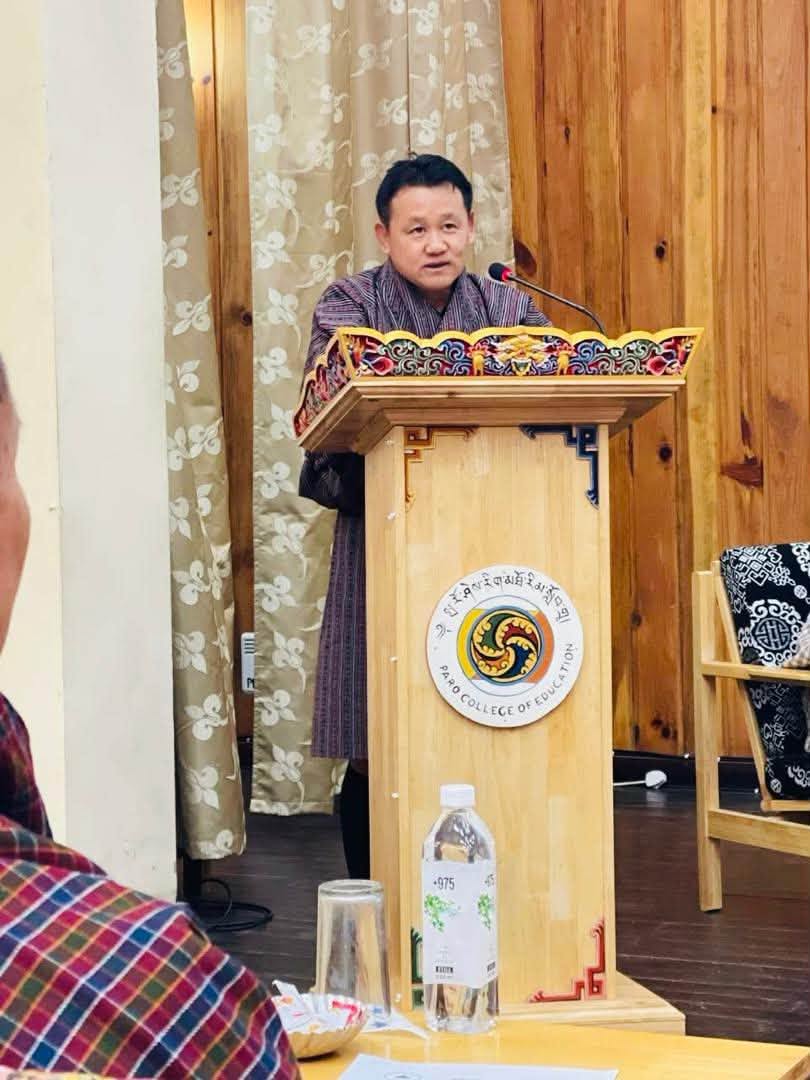
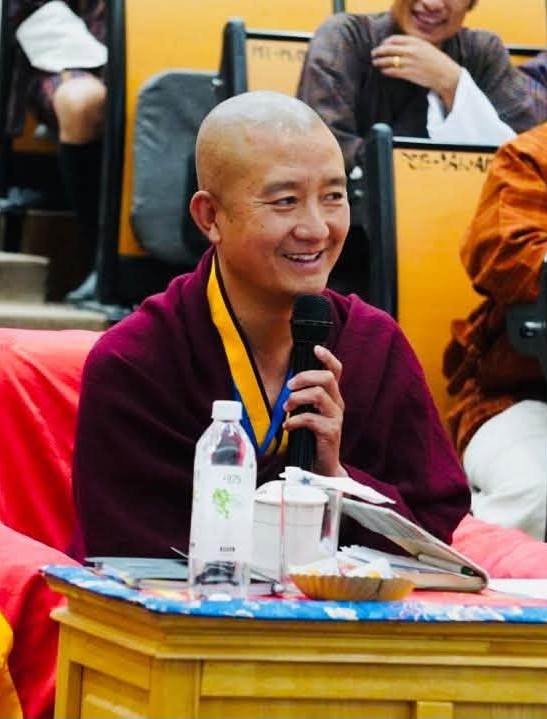
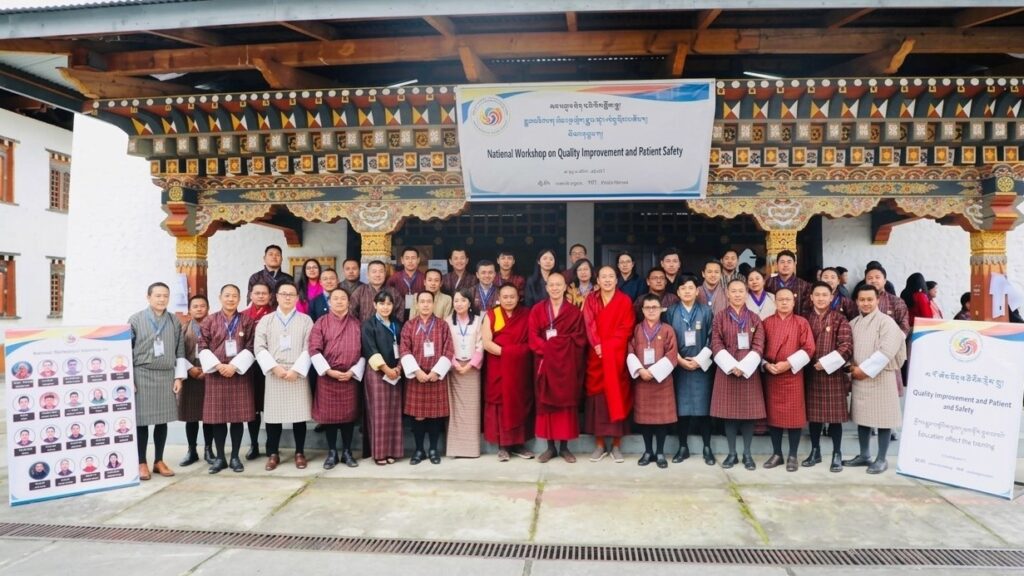
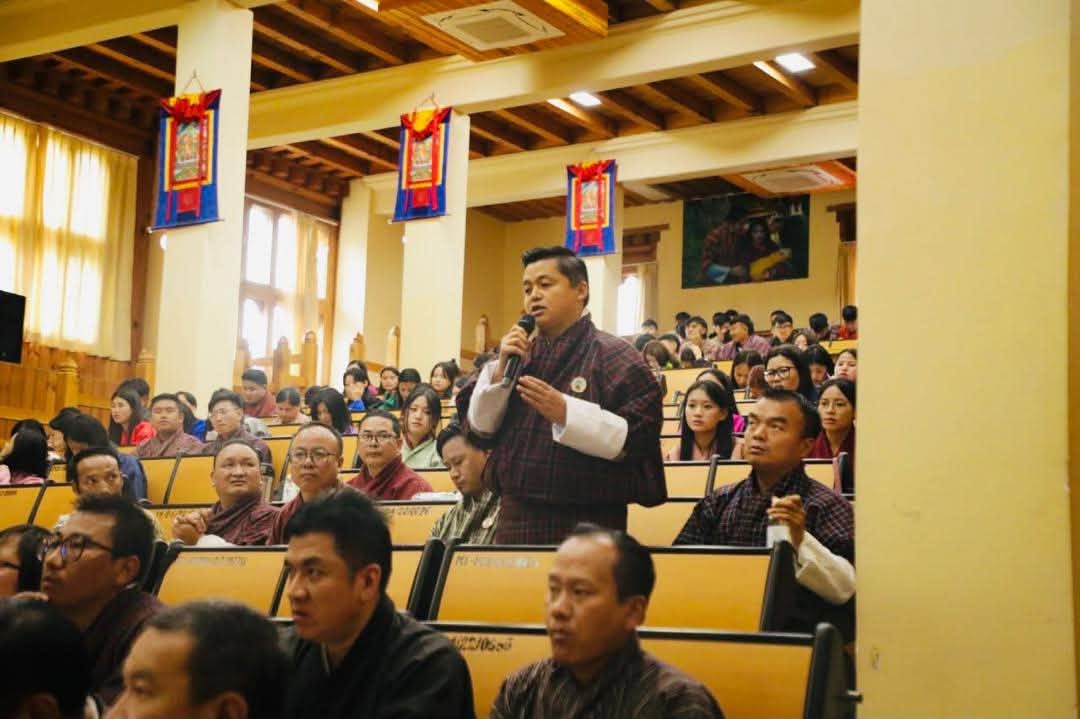
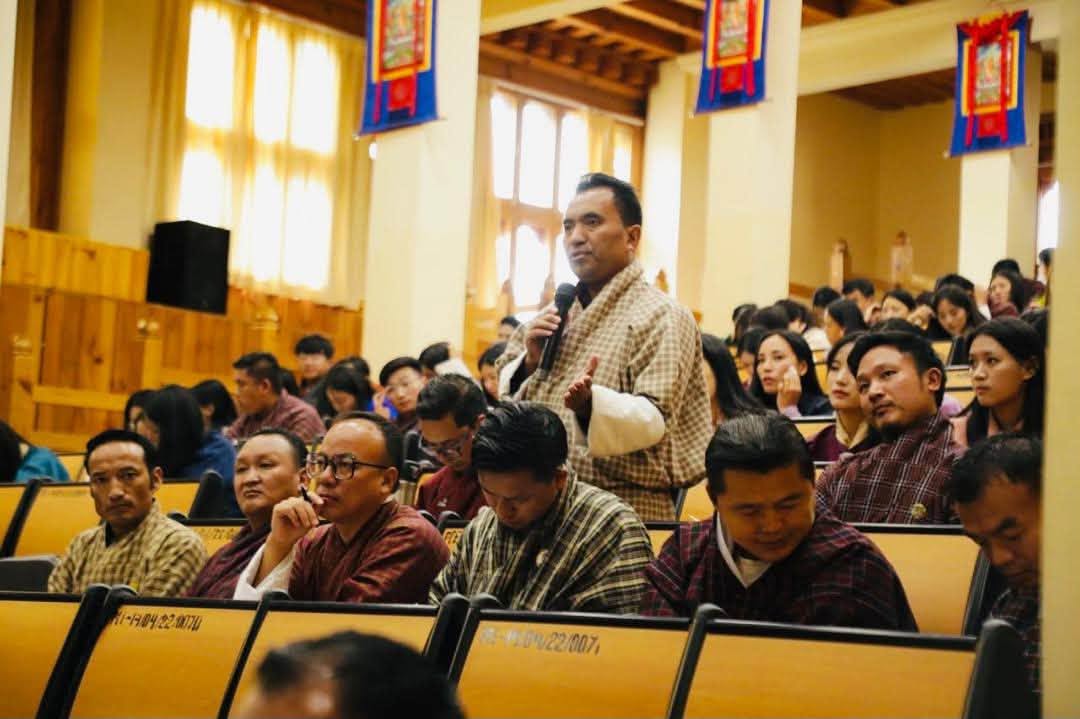
Paro College of Education (PCE) organised the Third National Seminar on Buddhist and Traditional Education on 8–9 October 2026. The seminar brought together the monastic community, scholars, educators, and students to examine the relevance of Bhutan’s spiritual and cultural heritage to contemporary education. Khentruel Tenzin Choki Jungney of Paro Dolma Lhakhang supported and graced the two-day gathering, strengthening the connection between spiritual traditions and educational scholarship.
In his opening address, the President of PCE situated the seminar within Bhutan’s national transformation under the visionary leadership of His Majesty the King. He emphasised education’s responsibility to prepare young people for a rapidly changing world while nurturing wisdom, compassion, ethical conduct, and a sense of responsibility. Technological competence and academic achievement, he noted, must be complemented by sound judgement, emotional maturity, and care for others.
Participants presented papers on moral science, semantics, pedagogy, curriculum practices, values, and vocation. These contributions provided a platform for examining how traditional wisdom can inform contemporary educational approaches. The Seminar highlighted the continuing relevance of Buddhist and traditional learning practices, including reflection, attentive listening, reasoned dialogue, and self-discipline, in strengthening teaching, learning, and wellbeing. Particular emphasis was placed on Tha Damtsig Ley Judrey as a foundation for trust, moral accountability, and responsible conduct. The discussions also identified opportunities for collaborative research and stronger partnerships among monastic institutions, universities, schools, and communities.
Looking ahead, to advance the study of Buddhist and traditional education and strengthen its contribution to Bhutan’s educational aspirations, PCE will continue to host it as an annual event, broaden multidisciplinary engagement, and bring out scholarly publications.